

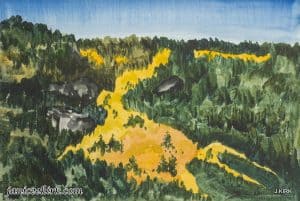
River of Golden Aspen
Part 2. Nature Lore: Aspen
In my previous blog I tell how I happened onto the fall scene that inspired my painting: River of Golden Aspen. We found the aspen aglow on this hillside and could see the pattern of growth . . .
An interesting species, Populus tremuloides, grows in colonies, sometimes very extensive colonies that started from one tree or perhaps one seed. They spread by means of root suckers, and often a new tree may appear a long distance from the main colony. They do not thrive in shade, but seek out open areas and are often the first vigorous growth there, something of a pioneer species. The trees themselves can live up to 150 years, and although the tree may die, the root system lives much longer, in some cases for thousands of years. As the older trunks die off, the roots send up new shoots to grow new trees. A huge wide–spread colony in the Wasatch Mountains of Utah is thought to be the oldest, an astonishing 80,000 years.
I love these graceful trees because they speak to me. When a breeze comes up, they talk in whispers. If you follow my Blogs you already know this, but I have other reasons to love them too. Any artist would be attracted to the dramatic gestures of angled trunks and twisted branches of more mature trees and to the high contrast color on the trunks. From a distance the trunks appear black and white. Up close the white bark is actually a pale tint of gray–green, aspen green. The black marks are scars left where branches broke off; or where animals damaged the bark, usually around the base of the tree; or perhaps storm damage occurred. Up close the marks read like a kind of history of the tree’s life. Read more next week about doing the actual painting . . .
Have you encountered colonies of aspen? Can you locate the starting point?
This painting illustrates my book, The Road to Beaver Park, Painting, Perception, and Pilgrimage.
Available at: http://WipfandStock.com http://Indiebound.org http://amazon.com http://barnesandnoble.com