
Quaking Aspen Part 2: The Neighbors
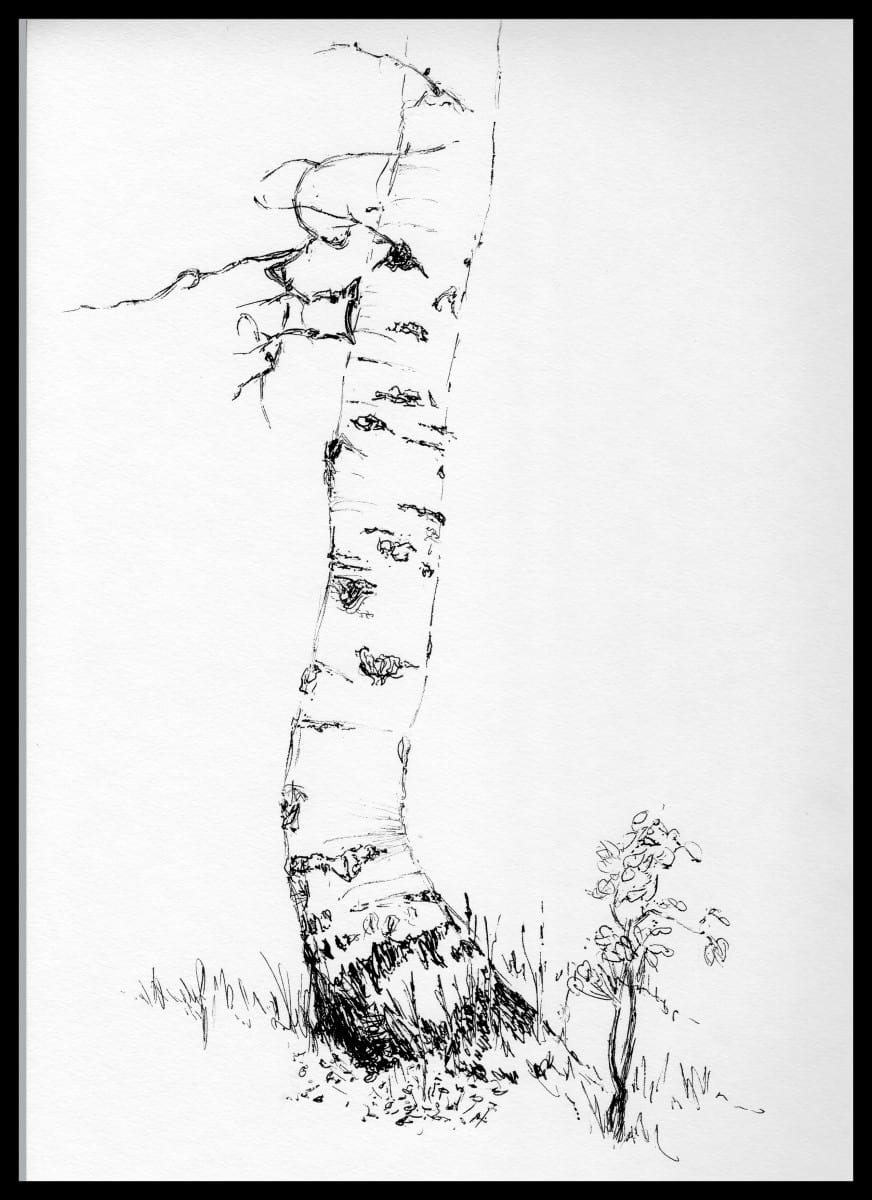
I saunter too close to the rockfall, and a marmot greets me with a piercing whistle. I wave, and he ducks back under the rocks to the safety of his den. I stand still long enough that a tree swallow swoops down and lands on a low aspen branch. That’s when I notice a hole in the tree trunk. The bird, carrying something in its mouth, hops forward and disappears into the hole. A modest commotion ensues, and I hear bird squeaks; then the tree swallow emerges from the hole and flies off. What a handsome fellow in the morning light, showing off a metallic-blue back and white underbelly. I slowly retreat from the scene. The nesting hole is high enough off the ground to be well protected, but I don’t want to disturb any parent raising a lively brood. I’m glad to meet the neighbors, but I need to start drawing. I cannot resist this modest congregation of whispering trees, so full of life and, in my eyes, artistic stature.
Drawing Equipment
Choice of pencil is personal, and a lot can be done with a common No. 2 yellow school pencil. However, because I like to draw fine lines and small detail, I prefer a harder lead which doesn’t smear. I use drawing pencils, HB, 2H, even 6H at times, and carry a small brass pencil sharpener. A good eraser is crucial. Hurray for the development of the white eraser, which I buy in its own pen-style holder at an Art Supply store. The drawing pad must be good quality paper; there are a number of fine brands, acid free, and ready for any dry media, pen, ink, or light washes. Good paper will remain white and durable for years. The 9×12 tablet fits my travel needs, but I carry a smaller 5×7 pad in my purse pack. In later years I added 11×14 for larger landscapes…