

From the files of Donald R. Kirk:
An angry tree swallow dives at my head. I duck, but the bird comes no nearer than a couple of feet. Another dive. Closer this time. I can feel the air from the beat of its wings. The bird is telling me I am too close. I move my camera and tripod about 15 feet from the nest hole, which is about eight feet up the trunk of a big aspen tree.
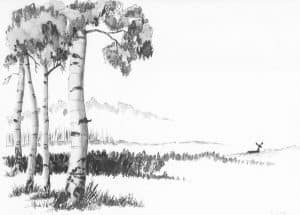
I see some humor in this move because it puts me right against our 9×12-foot wall tent. We are camped in a remote spot in the Warner Mountains in NE California. When we pitched our tent on the edge of a large aspen grove facing a mountain meadow, we didn’t notice the swallow nest less than 20 feet away.
Me moving back seems to satisfy the bird, and it also gives a better view of the nest hole. Both parents are busy catching insects to feed their offspring. Between parental visits with food, the young are quiet. With the arrival of food, enough noise for a dozen young birds erupts from the nest. Since tree swallows lay three to eight eggs, my guess is no more than five chicks are in this family. When making the nest in this old woodpecker hole, the male brought dry grass and other soft plant materials to the female who did the work of building, lining the nest with feathers. I can’t see into the nest, so I don’t know for sure how many young birds are being fed.
Mom or dad (they look alike) arrives with a beakful of insects. As the adult bird lands, its sharp, clawed toes grip the lower edge of the nest hole. Instantly a youngster pokes its head out of the hole with beak wide open for food.
You have to see this to believe it. The head of the “baby” looks as big as the adult. The parent pushes its own head up to its eyes into the young bird’s gaping mouth. Even if it’s still alive, the insect food stands no chance of escaping. All of this takes place in a flash, and the adult is off to capture another luckless bug.
As I pack up my camera gear, it occurs to me that my young son and daughter might be interested in finding bird nests. For a reward, of course. I suggest this to them and offer a finder’s fee of 50 cents per nest…to be continued.