
From the files of Donald R. Kirk…
Part 2. Amazing Adaptability
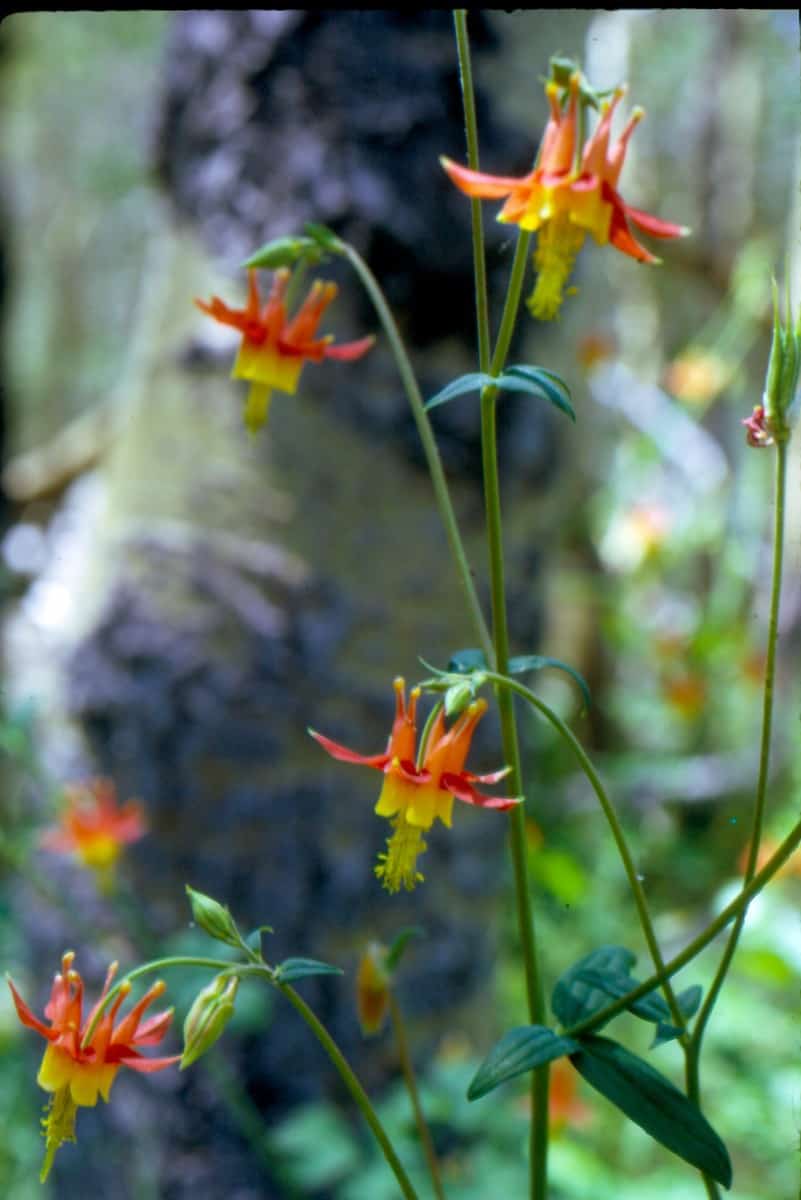
Survival in nature has to do with adaptability. The bumblebee can harvest nectar directly from the open flower as do honeybees, or it can obtain the nectar from a hard to reach structure like the spurs on this red columbine.
The adaptability of the red columbine (Aquilegia formosa) is astonishing. The plant thrives in a wide variety of moist habitats from sea level to timberline in our western mountains. It seems to be satisfied with sun or shade, rocky areas, meadows, beaches, and even roadsides as long as the moisture is permanent, and the soil well drained.
Columbines are found worldwide. Three species are listed for California. A beautiful blue columbine is the state flower of Colorado. John Gerard’s book, The Herbal, or General History of Plants, published in London in 1633, lists eight species of columbine illustrated with superb woodcuts. One of these is of a red columbine. The illustration looks nearly identical to our own red columbine. This book is not a pocket–sized field guide to flowers. My copy of Gerard’s Herbal weighs close to ten pounds.
It’s interesting to note that prepared in various ways, the red columbine was widely used medicinally among American Indians for treating rheumatism, stomach and intestinal disorders, dizziness, head colds, bee stings, sore throat, skin injuries and sores, diarrhea, head lice, and other maladies. The seeds were rubbed on the body and clothing for perfume. Some California Indians boiled and ate the early spring greens. If you try this, care should be taken to properly identify the plant because some columbines are highly toxic.
Nowadays it’s not recommended to forage such a beautiful flower in the wild. Native plants need all the help they can get. Let them live where you find them beautifying the landscape and providing nectar for wildlife. The good news is that red columbine is sold as an excellent, eye–catching choice for the garden with flowers that attract hummingbirds. Look for seeds under the name red, western, crimson, or Sitka columbine.
Classic Reference: The Herbal or General History of Plants, 1633 Ed, by John Gerard, New York: Dover, 1975