

 From the files of Don Kirk…
About 100 lightning strikes occur every second on planet Earth. Around one third hit the ground. The rest occur in clouds or between clouds, or between clouds and air. Most of the energy of these strikes goes to produce radio waves, hot air, and thunder. Only a small amount of energy is available at the strike point. Even so, we are all aware that this is enough to kill animals including people, damage buildings, cause severe electrical disturbances and power outages, and to start devastating wildfires.
A lightning strike is very hot, about five times hotter than the surface of the sun. Lightning varies widely in duration. Some strikes are less than a millisecond. Others may last most of a second, which may not seem long, but is enough to severely effect the strike point. Lightning strikes vary in power. Usually, the longer lasting strikes are the most powerful. These are believed to cause the formation of fulgurites.
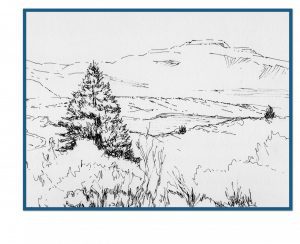
Why am I thinking these things here on the rim of this high northern California mountain range at 7800 feet elevation, looking eastward down into a beautiful desert valley nearly a mile below, with a vast panorama extending into Nevada? The reason is that I am sitting on a fulgurite. On this flat, lava outcrop are several of these formations, varying in size from 10–20 square inches to over 100. No road or trail runs along this rim, which suits me just fine. An easy, half–mile, cross country walk through a nearly pure stand of lodgepole pine forest got me here.
So what is a fulgurite?. There are two kinds: sand and rock fulgurites. The most common are sand fulgurites, forged when a powerful lightning strike hits sand that is high in silica. The sand melts, and natural glass is made. This occurs on sand dunes, ocean beaches, or anywhere there is plenty of high silica sand in an area likely to be hit by lightning.
Rock fulgurites form when lightning strikes the surface of high silica rock, like this lava outcrop. The rock surface melted which produced natural glass. This commonly happens on high elevations, like mountain peaks. Climb just about any volcanic summit in the Cascades of the Pacific Northwest and you will find fulgurites…to be continued.