

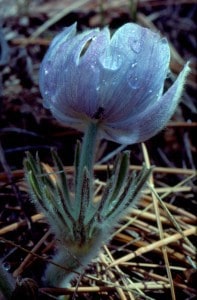
Behold! A Pasqueflower at Haviland Lake, Colorado
How often do we really look at something? I mean really look—take time to survey, observe, regard, contemplate, inspect, notice, gaze upon, view, watch, discern, or behold? ‘Behold’ is an archaic word that still resonates with meaning. I picture a Medieval Herald in dramatic pose, gesturing to indicate an important personage or perhaps introducing a play or an event. In old writings ‘behold’ was used as a literary device to show importance of what is to follow. It calls on the viewer to take note, pay attention. The King James Version of the Bible is sprinkled with ‘beholds’, e.g. “Behold, I will do a new thing . . . I will even make a way in the wilderness, and rivers in the desert.” Isa 43:19 (KJV)
We need more watchers, more ‘beholders’ of God’s beautiful creation. The word ‘beholding’ is holistic. It is action that encompasses more than just noticing a subject. It establishes an aura of respect; acknowledges the existence of the subject; and that it has a reason for being. It may hold an important place, a particular role, or function. In the outdoors, it might be a vital part of the green infrastructure that blankets the earth and supports living things. It might be a key species in the animal kingdom with an important function in the networks of life.
Behold. It’s worth doing. Take time to behold a colorful sunset. Pay attention to a unique cloud formation. Watch the movement of a bird on the wing, or a wild animal crossing a field. When you come upon fall colors, do more than glimpse. Look closely at the foliage. Can you discern each tint and shade of color? When green shoots of stems and leaves appear in the soil, stop and survey, inspect, and regard them. They herald the growing season. Take another look. Single out one plant and observe its growth pattern. Scan the sky and collect a cloud for your memory bank. Add to your bird list. Walk around the local lake, thanking God for moisture basins, and the water that supports life.
Health experts are now confirming what we nature nuts knew all along, that getting outdoors is good for health and well–being. It’s also good for the earth. Close interest brings appreciation. ‘Beholding’ will lead us to feel like we belong, that we are members of the communities of life. Yes, belong. We will grow to love our place in our own life community. We will want to care for living things, the life networks, and their support systems. Behold, we will Cherish the Earth.
Read more about the need for “Beholders” in Ask the Beasts, Darwin and the God of Love, Elizabeth A. Johnson (Bloomsbury Publishing: New York, 2014), p. 42. http://www.bloomsbury.com